
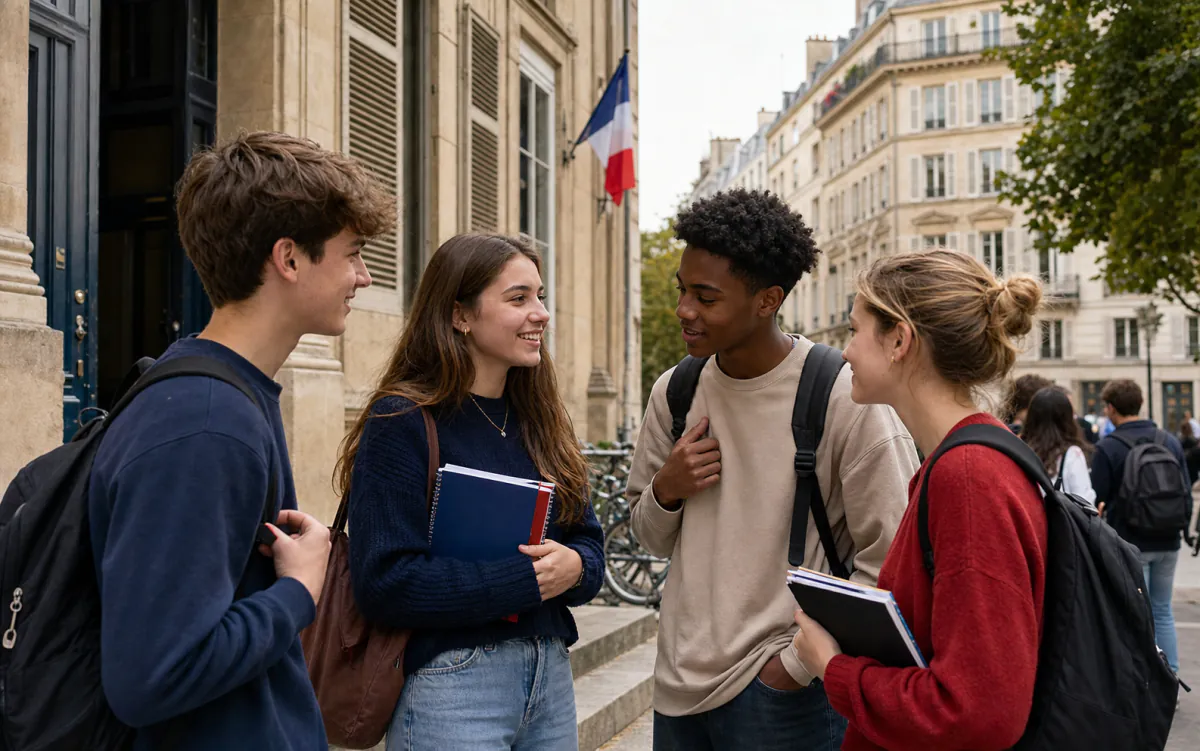
A summer of French language immersion
At a camp in France, the language does not stay inside the classroom. It appears when students understand the rules of a game, ask about the schedule, join a team, order lunch or make plans with new friends. French becomes the tool that allows them to take part in everything happening around them.
That is the difference between studying French for a few hours each week and living a language immersion experience. For several days or weeks, listening and speaking stop being exercises. Students discover they can communicate with the language they already have and begin to pick up new expressions because they genuinely need them.
French lessons combined with continuous practice
There are two main approaches, which can also be combined:
- French classes plus activities: level-appropriate sessions for part of the day followed by sport, workshops or trips. This works well when students need to organise existing knowledge, expand vocabulary and gain confidence before speaking more freely.
- Activity-led immersion: French is learned through participation, instructions and social interaction. This particularly suits students who already have a foundation and need to stop translating every sentence in their head.
We do not choose a programme simply because it advertises more class hours. We look for the option that helps each student listen, understand and use French for longer and more naturally.
An environment that encourages French
The group mix matters. We prioritise programmes where French is the shared language and where interaction with French-speaking and international students supports participation. If other students share the same native language, the aim is to prevent a closed group from weakening the immersion.
Activities also need to match the student’s interests. When someone is focused on a match, a cooking workshop, a trip or a creative project, the fear of making mistakes often fades and communication becomes more spontaneous.
What the language experience can develop
Every student progresses at a different pace, but a strong immersion experience can help them:
- Adapt their ear to natural French speed and pronunciation.
- Retrieve vocabulary more quickly while speaking.
- Use everyday expressions rarely found in exercises.
- Lose some of the fear of making mistakes in front of others.
- Return to lessons at home with stronger motivation and a real reference point for the language.
A few weeks do not replace years of learning. Their value lies in activating what has already been studied and showing the student that French is a language they can actually live in.
A programme matched to level and personality
Before recommending a camp, we discuss French level, age, independence, interests and how the student responds to new environments. Some students need structured classes; others gain more from activity-led immersion and social interaction.
We prepare them for what to expect and give them simple strategies to ask for help, begin conversations and join in from day one. There are no generic published prices because each proposal depends on dates, duration, accommodation and programme type.
Ready for a longer step? See the term or school year in France, or compare summer in Ireland and Canada.