
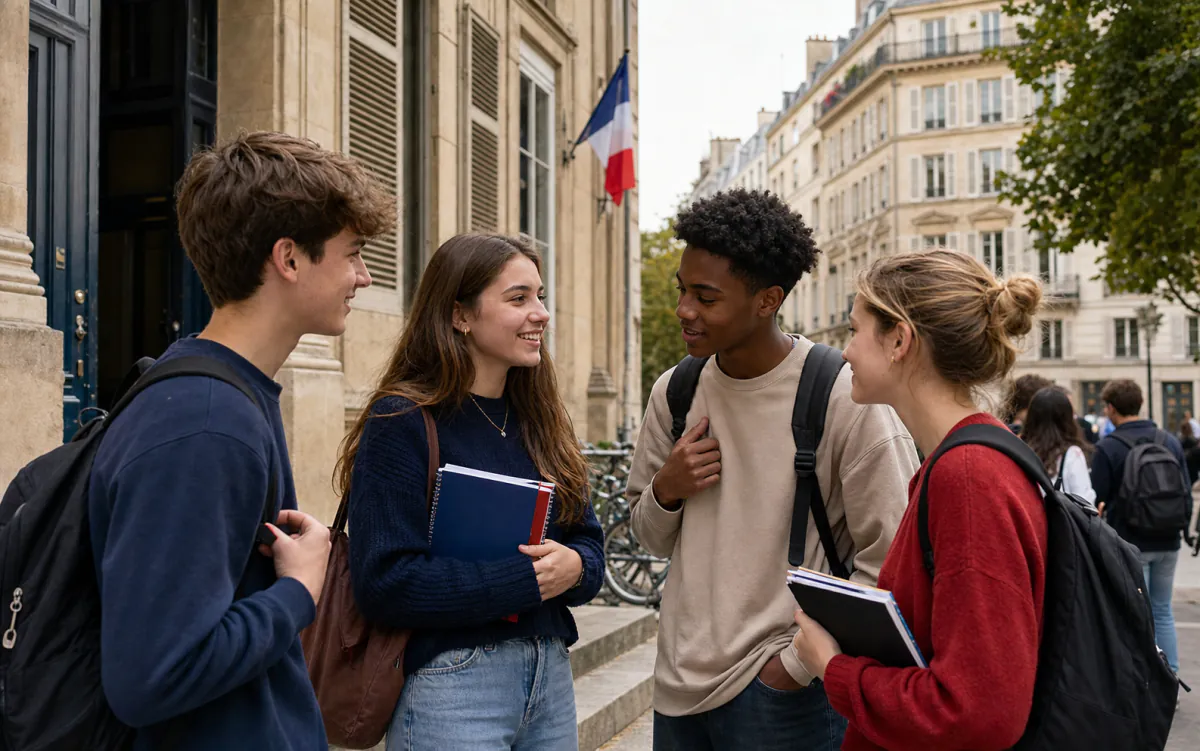
French immersion: from classroom knowledge to real life
Learning French at home and living in French in France are very different experiences. During a school stay, students use the language to understand a lesson, ask for repetition, work in a group, join a sports session, buy a snack and explain how their day went.
This continuous use is the core of language immersion. The ear gradually adapts to natural speed and expressions that do not appear in textbooks. Students stop translating every sentence, pick up everyday language and answer even when their French is not yet perfect. The goal is not perfection on arrival; it is using French every day until communication feels increasingly natural.
School means hours of thinking and learning in French
For a term, semester or full school year, French is not one isolated subject. It is the language used to explain other subjects, complete assignments and interact with classmates. This prolonged exposure develops:
- Listening comprehension through lessons and natural conversation.
- Useful vocabulary attached to real situations.
- Speaking and pronunciation because communication becomes necessary.
- Confidence from discovering they can communicate without knowing every word.
- Cultural awareness through routines, habits and social codes.
Starting level matters. A beginner benefits from more structure and gradual integration. An intermediate student can thrive in a setting that demands more spontaneous participation with local peers.
Accommodation is part of the language experience
With a French host family, immersion continues through breakfast, evening meals, weekly routines and the small conversations that make a student feel part of the household. This route particularly suits students who are ready to engage in family life.
A residence or boarding environment provides stronger structure, shared activities and interaction with French and international students. It may better suit someone who enjoys campus life or needs a more clearly organised day.
Accommodation is not chosen solely by availability. We consider which setting will help the student listen, participate and use more French according to their personality.
Preparing students to make the most of immersion
Before travel, we assess current French, expectations and the situations that tend to feel hardest in the first weeks. Students prepare simple ways to ask for help, introduce themselves, contribute in class and avoid retreating into their native language when they feel shy.
We also match school, area and accommodation to age, independence, interests and language goals. Personal guidance continues during the stay, alongside support with the return to the student’s home education system where applicable.
Close to home, fully inside another language
France offers deep language immersion without distance becoming the main obstacle. It can be a first academic experience abroad or the decisive step for a student who has studied French for years and now needs to turn theoretical knowledge into listening ability, agility and communicative confidence.
Would a shorter experience feel right first? Explore summer camps in France, or compare with the school year in Ireland and Canada.